Category: Planning + Community Design

The Cape Cod Commission is pleased to release the draft 2025 Regional Policy Plan for public comment. The public is invited to review the document and submit comments by Monday, August 25, 2025.

Women's history on Cape Cod is marked by resilience and leadership, with women playing pivotal roles in shaping the region’s communities since its early settlement. In the 19th century, while many men were away at sea, women managed households, farms, and local businesses, becoming the backbone of Cape Cod’s coastal villages. As educators, abolitionists, and suffragists, Cape Cod women like Mercy Otis Warren and Helen Augusta Crocker advocated for social change. During the 20th century, women continued to lead, from environmental conservation efforts to local politics. Today, women continue to be vital leaders in the region’s civic, cultural, and environmental spheres.
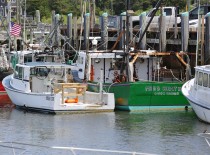
The Cape Cod Commission recently conducted an economic analysis of Rock Harbor in response to a request from the Town of Orleans. The study aimed to assess the harbor’s contribution to the local economy and to better understand visitor behaviors. Using data collected through business surveys, intercept surveys, cellphone data analysis, and economic modeling, the report sheds light on the harbor’s importance as both a working waterfront and a desirable community destination.

When creating digital plans, it’s essential to have an accurate representation of the natural and built environment. But how do you achieve that?
These representations of our landscape aren’t just developed on a computer screen—they are digitized versions of the real-world environment of the region. Planimetric data are digital points, lines and polygons representing features on the ground, such as manholes, coastal infrastructure and catch basins, that can be used in geographic information system mapping applications.

As Cape Cod towns work to address challenges related to affordable housing, climate and coastal resiliency, and economic stability, a Local Comprehensive Plan (LCP) can serve as a blueprint for a sustainable future. LCPs help communities navigate change while protecting the Cape's defining character and resources.

The Cape Cod Commission is collaborating with the Town of Falmouth to develop a wayfinding plan for downtown. This plan aims to improve navigation for motorists, transit users, pedestrians, and bicyclists in the area.

Each year, the Cape Cod Commission receives funding through the Massachusetts Department of Housing and Community Development to provide technical assistance to towns in our region. The District Local Technical Assistance (DLTA) program helps municipalities with sustainable development and encourages partnerships to achieve planning and development goals that align with state and regional priorities.

Supported by $200,000 in state funding, the Cape Cod Commission collaborated with Barnstable County and the Rennie Center for Education Research & Policy to conduct a survey-based needs assessment related to early education and childcare for Cape Cod and the Islands.
The project aimed to better understand existing levels of provision and needs in the early education and childcare industries, identify gaps in services, and explore potential strategies for improving the accessibility of services in the region.

Each year, the Cape Cod Commission receives funding through the Massachusetts Department of Housing and Community Development to provide technical assistance to towns in our region.

This month, the Association to Preserve Cape Cod (APCC) and the Housing Assistance Corporation (HAC) launched Grow Smart Cape Cod, a mapping project that illustrates priority areas for natural resource…