What's included in this year's Transportation Improvement Program?
Moving transportation projects from concept to completion requires coordination among regional partners. The Cape Cod Commission supports the Cape Cod Metropolitan Planning Organization (MPO) and the Cape Cod Joint Transportation Committee (JTC), which work together to set priorities and guide the use of transportation funding on Cape Cod.
The MPO is a federally required regional body that decides how federal transportation funds are spent through a collaborative process involving local governments, agencies, and the public. The JTC serves as the main advisory group, reviewing plans, evaluating regional needs, and making recommendations to the MPO.
Each year, the MPO prepares key planning documents to guide transportation investments. These include the Transportation Improvement Program (TIP), a five-year list of funded projects, and the Unified Planning Work Program (UPWP), which outlines upcoming studies.
On April 27, 2026, the MPO voted to release the draft FFY2027-2031 TIP and draft 2027 UPWP for a 14-day public comment period. Public input plays a crucial role in the process, and residents are encouraged to attend meetings and participate in planning activities. Visit www.capecodcommission.org/tip for information on upcoming meetings and details on submitting public comment.
Below are several projects included in the Draft FFY2027-2031 TIP. The TIP also includes $830 million for the Cape Cod Bridges Program, and funding for regional transit services.
Yarmouth: Route 28 Improvements (FFY 2029-2031)
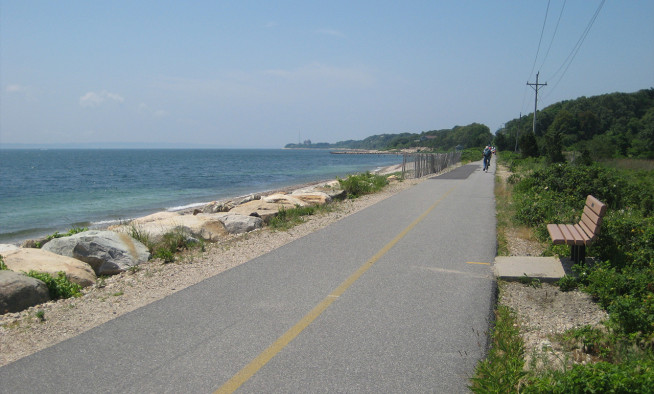
Planned upgrades to 2.9 miles of Route 28 in Yarmouth from the Yarmouth Road intersection in Hyannis to Parkers River aim to improve safety and accessibility for all roadway users. The project includes new sidewalks, upgrades to key intersections, upgraded crosswalks, and a shared-use path on the southern side of the road, providing a continuous route for pedestrians and cyclists. A roundabout is planned for the intersection of Route 28 and East Main Street, and Route 28 at Town Brook Road will be equipped with new traffic signals to help traffic flow more smoothly and safely. By combining roadway improvements with pedestrian and cycling amenities, this project aims to make traveling along Route 28 safer and easier for everyone.
Dennis: Route 28 Improvements (FFY 2028-2029)
This project marks the third phase of improvements along Route 28 in Dennis, continuing work to close gaps in bicycle and pedestrian accommodations and enhance overall safety. The focus is a 1.2-mile stretch from Uncle Barney’s Road to Old Main Street in West Dennis. Planned work includes installing new sidewalks, making minor intersection upgrades, and building a shared-use path along the northern side of Route 28 for pedestrians and cyclists. Additional improvements will address drainage, upgrade bus stops, add landscaping, and install new street lighting. Together, these improvements are designed to create a safer, more accessible corridor for everyone traveling through this section of Dennis.
Provincetown: Shank Painter Road Improvements (FFY 2026-2027)
This project will enhance safety and mobility along Shank Painter Road through roadway reconstruction and upgrades for all users. The corridor, stretching from Route 6 to Bradford Street, will see improvements for drivers, pedestrians, and cyclists. Planned work includes constructing new sidewalks, adding bicycle facilities, upgrading drainage, and installing new pavement markings and signage. A modern roundabout is proposed at the intersection of Route 6 and Shank Painter Road to improve traffic flow and safety. The project also features a road diet on Route 6 between Shank Painter Road and the Cape Cod National Seashore, converting two travel lanes into a shared-use path. This will create more space for people walking and biking, further enhancing safety along the corridor.
Chatham: Intersection Improvements at Rt 28, Crowell Rd, Depot Rd, and Queen Anne (FFY 2028)
This project aims to improve safety, traffic flow, and multimodal access at the intersection of Route 28, Crowell Road, Depot Road, and Queen Anne Road. The proposed upgrades are designed to serve drivers, pedestrians, and cyclists while addressing geometric and safety concerns. Planned improvements include adding left-turn lanes on Route 28, installing bicycle lanes and sidewalks, and constructing a shared-use path along the southern side of the corridor. A new traffic signal system will also be added, with emergency pre-emption, pedestrian push buttons, and clearly marked crosswalks. Together, these improvements will make the intersection safer and easier to navigate for everyone.
Eastham: Route 6 improvements (FFY 2031)
The Route 6 Corridor Improvements Project focuses on 1.6 miles of Route 6 from Brackett Road to the Wellfleet town line. This project aims to enhance safety and mobility for all users while supporting Eastham’s long-term transportation and land-use goals. Building on prior planning and studies, the proposed project advances a context-sensitive, boulevard-style roadway that addresses safety needs, provides safe pedestrian and bicycle access, improves operational efficiency, and enhances access to destinations like the Cape Cod National Seashore, town beaches, and the future North Eastham Village Center. Key goals include improving roadway safety, strengthening pedestrian and bicycle connections, supporting efficient vehicle operations and emergency response, and designing Route 6 to function as both a regional corridor and a local main street.
Barnstable: Route 132 Corridor Improvements
This project focuses on approximately 1.5 miles of Route 132 (Iyannough Road) in Barnstable, from Bearses Way to the Airport Rotary. The primary purpose of the project is to enhance safety, accessibility, and mobility for all users while supporting its role as a major commercial and regional travel route in Hyannis. The proposed project builds on prior studies and safety evaluations to advance a context-sensitive design that addresses safety concerns, improves intersection operations, and incorporates multimodal accommodations. Planned improvements include upgraded intersections, enhanced pedestrian crossings, ADA-compliant facilities, and shared-use paths and sidewalks. Key project goals include improving roadway safety, providing pedestrian and bicycle infrastructure, supporting efficient traffic flow and transit access, and creating a corridor that balances its function as a high-volume arterial with the needs of adjacent users.
For more details on the Transportation Improvement Program and these projects, please visit www.capecodcommission.org/tip.
Related Posts