Summer traffic data collection underway
Cape Cod Commission traffic technicians are back on the road for summer 2026, collecting essential data from the region’s roadways to inform transportation planning projects for the coming year and beyond.
On a Friday in early June, this year’s traffic technicians were pulling up tubes that had been stretched across several local roadways over the past few days. These unassuming tubes play a vital role in regional transportation planning. When vehicles pass over them, the air displacement inside the tubes is measured—each puff signals a vehicle’s presence. With two tubes in place, the system can also determine the vehicle's speed, size and direction of travel.
Senior Transportation Planner Dave Nolan oversees the summer traffic technicians and manages the seasonal traffic counting program.
“This week we're in Sandwich, helping the town out as they prepare for a potential shared use path project through their town,” Nolan explains. “We've been collecting a lot of data around Route 6A and Route 130 by the canal to help with their planning process.”
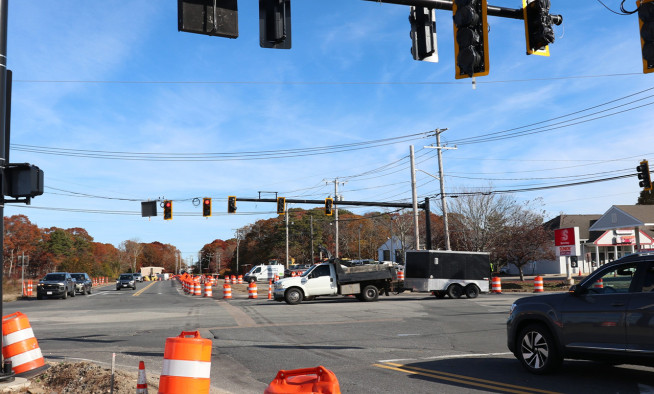
Traffic technicians help collect data across the region to examine seasonal trends and growth rates. “We look at high crash locations, and we do intersection counts as well,” says Nolan.
Data collected includes the number of vehicles traveling in each direction and the number of turning movements at intersections. "We also examine other factors, such as crash data and intersection lighting," Nolan adds. "There’s a lot we unpack when planning and improving our roadways."
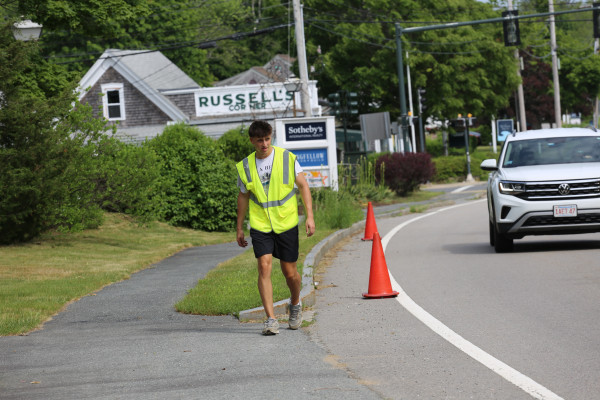
Paul Rideout is back for his second year as a traffic technician. “I graduated from the College of Charleston two weeks ago, and I love it here.” Rideout was drawn to this position because it offers the duality of collecting data in the field and analyzing it in the office.
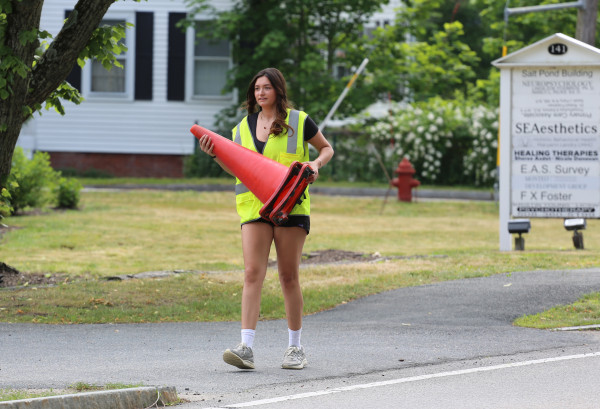
Isabella Johnson graduated from UMass Amherst this spring with a degree in regional planning. In addition to helping gather field data, she’s helping decode existing data. “I've looked at the crash report data from the past ten years, and I'm looking at incidents of hydroplaning.”
“Our traffic techs do great work every year, and a lot of them go on to get into the data, planning, or transportation engineering fields,” said Nolan. “I always like to know where they end up. And we've had some really good success with our traffic techs.”
Johnson is heading back to UMass this fall to begin work towards her master's degree. “This is my first job related to planning. I've always been interested in climate resilience, so the Cape is the perfect place to gain experience.”
Rideout is headed toward a career in analysis. “I want to go into being an analyst, either financial or data. I do enjoy using data to actually make a difference for this county, because I grew up here, born and raised here.”
The summer traffic technician program provides critical data for the Commission’s transportation planning, supports municipal initiatives, and informs a wide range of regional plans.
“Everything starts with data,” Nolan says. “We need data before we can make informed decisions that have a positive impact, improve safety, reduce congestion, and make things better for everyone: drivers, cyclists, pedestrians, and all roadway users.”
Related Posts