Cape Cod Bridges Program reaches significant milestones
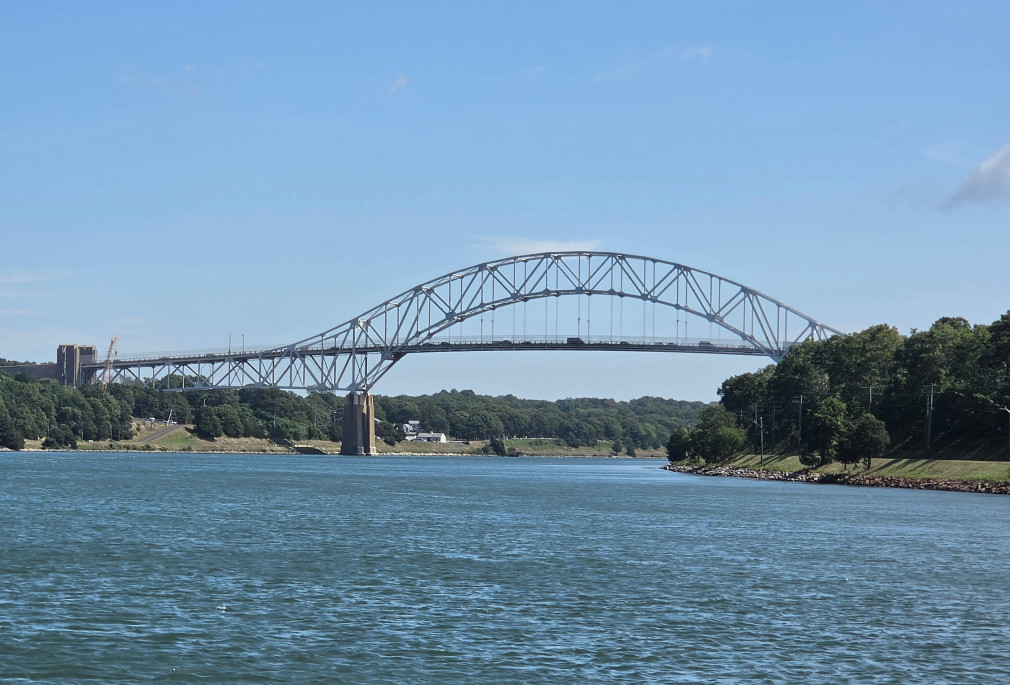
The Cape Cod Bridges Program is swiftly moving forward, with efforts to replace the Sagamore Bridge reaching several major milestones this month.
Luisa Paiewonsky, Executive Director of Megaprojects at the Massachusetts Department of Transportation (MassDOT), updated the Cape Cod Commission on the program and answered members’ questions at their September 17 meeting.
MassDOT has completed both state and federal environmental reviews for the bridge program over the summer.
“We have no more permits to apply for, either on the federal or state side,” Paiewonsky said. “We are no longer in the permitting realm. That’s a big step forward.” Work on the Sagamore Bridge will proceed first with Bourne Bridge work to follow when funding becomes available.
The Federal Highway Administration has also approved the project management and financial plans for the roughly $2 billion Sagamore Bridge project. With these approvals, MassDOT expects to secure $956 million in previously awarded federal Bridge Investment Program funding, in addition to $36 million already made available for pre-construction activities.
MassDOT issued a Request for Proposals on September 24, 2026 to three ventures selected through a qualification process this summer. Proposals will be evaluated based on technical merit and price, with teams encouraged to identify opportunities to reduce construction time and costs.
Technical and price proposals are due in May 2027, with a public price opening in July. MassDOT anticipates selecting a contractor, completing contract negotiations, and issuing a notice to proceed by the end of 2027. Construction activity should become increasingly visible in early 2028.
During an extended question-and-answer session, Commission members asked Paiewonsky about construction timing, traffic impacts, environmental protections, the new bridge design and the project’s potential long-term effects on the region.
Addressing questions about traffic, Paiewonsky said MassDOT expects the most noticeable impacts during the first year of Sagamore Bridge construction as drivers adapt to new traffic patterns. Two travel lanes will remain open in each direction across the bridge, and efforts will be made to ensure existing interchange capacity is maintained.
“We’re talking about a 10 to 15 percent impact,” she said. “We’re not talking about doubled travel times.”
Construction is expected to continue year-round, although work will be curtailed around peak travel periods such as the Fourth of July and Labor Day. Traffic conditions will be continuously monitored, and resident engineers will have the authority to stop and reschedule construction activities if they cause excessive backups.
The phased twin-span design allows all traffic to move onto the first new Sagamore span about five years after construction begins. The existing bridge will then be demolished and the second span constructed. Paiewonsky said this approach enables MassDOT to take the 91-year-old Sagamore Bridge out of service sooner while maintaining traffic capacity.
MassDOT plans to expand public outreach over the coming year, coordinating with the Town of Bourne on traffic management and emergency response, conducting outreach through libraries and schools, and developing new materials to inform residents, businesses, and travelers about what to expect during construction.
Paiewonsky also provided an update on efforts to secure funding to replace the Bourne Bridge. In August 2025, MassDOT and the U.S. Army Corps of Engineers jointly applied for more than $1 billion through the federal Bridge Investment Program. In August 2026, the Federal Highway Administration informed MassDOT that the application rated highly in two of three evaluation categories but received a medium rating for project readiness. Federal officials invited the project team to supplement the application, allowing MassDOT to document its progress over the past year.
Although the Cape Cod Bridges Program is not subject to Cape Cod Commission Development of Regional Impact review because of federal and state preemption, Commission staff remain actively involved through the Cape Cod Bridges Advisory Group, the federal historic preservation review process, and support for the Cape Cod Metropolitan Planning Organization. That coordination will continue as the program enters procurement and the region prepares for construction.
Related Posts